
Spatial analysis through the Territorial Carrying Capacity (TCC)
Keywords:
Territorial Carrying Capacity (TCC), Territorial planning, Environmental impacts, Spatial organization, GeographyAbstract
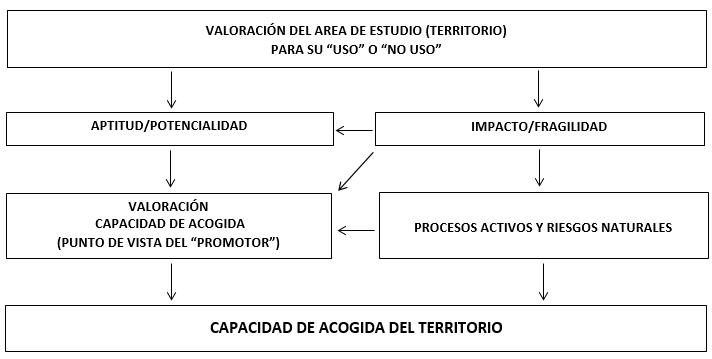
Territorial Carrying Capacity (TCC) is understood as the degree of suitability a territory presents for the implementation of a given activity, considering both the extent to which the environment meets the activity’s locational requirements, and the impacts the activity may have on the environment. This paper aims to contribute some theoretical insights on TCC, highlighting the opportunities this methodology offers not only for spatial organization but also for geographical studies in the Argentine Northeast region.
TCC seeks to reconcile two opposing perspectives. The promoter’s viewpoint, which focuses on developing infrastructure or various activities neglecting the resulting environmental disruptions; and the conservationist approach, which emphasizes the potential environmental impacts of proposed spatial uses. The methodological proposals outline various ways to apply Territorial Carrying Capacity, supported by Geographic Information Systems (GIS) and Multi-Criteria Evaluation (MCE) techniques.
Downloads
Downloads
Published
Issue
Section
License

This work is licensed under a Creative Commons Attribution-NonCommercial-ShareAlike 4.0 International License.